
Energy
Tracked electrical demand and energy consumption
- Total facility energy consumption
- IT energy consumption
- Non-IT and cooling energy consumption
- UPS losses and electrical efficiency
- Generator energy and fuel usage
Standardised metrics for credible reporting and confident decision-making
Report Zero applies recognised global standards to operational, efficiency and environmental metrics, enabling organisations to measure, compare and manage data-centre performance with confidence.
Metrics are calculated consistently across sites and portfolios, supporting regulatory reporting, operational optimisation and executive decision-making from a single, defensible data foundation.
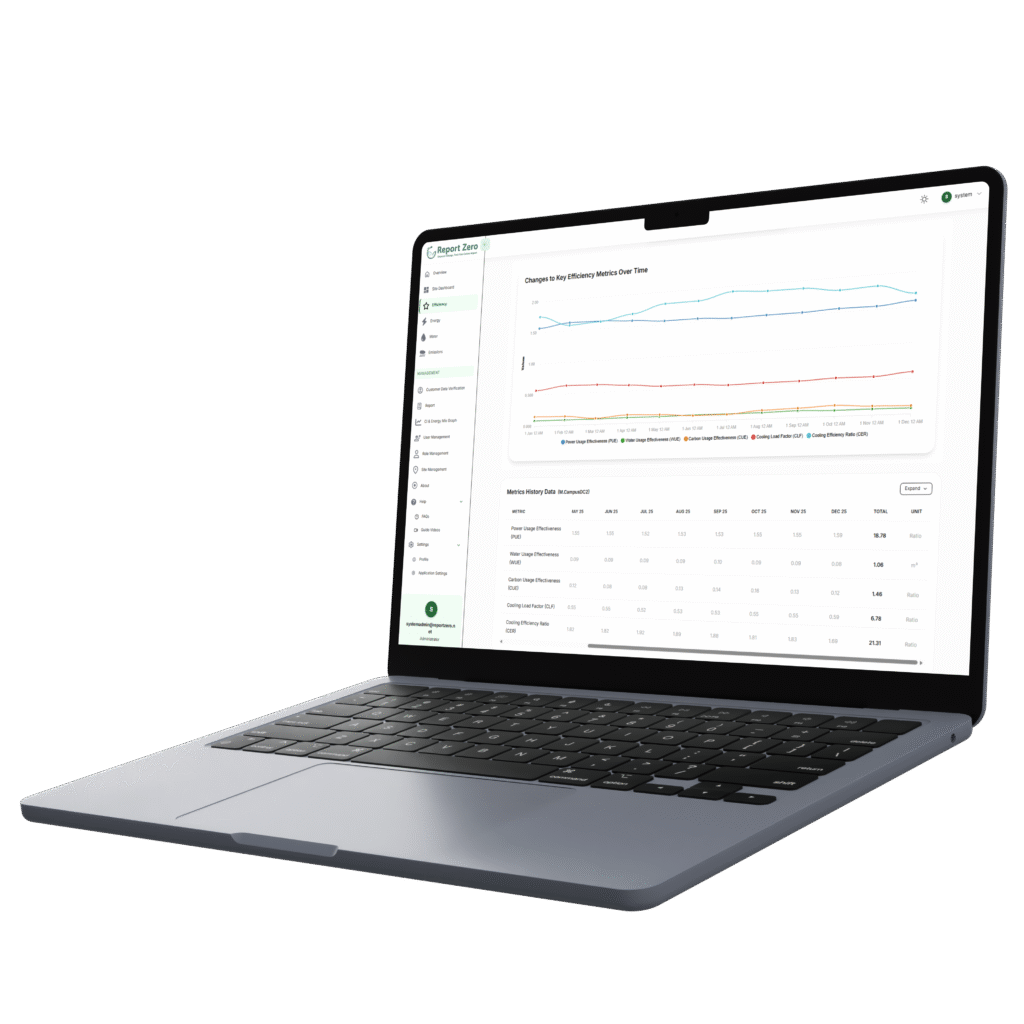
Report Zero organises metrics in a way that reflects how performance data is generated, interpreted and used in real data-centre environments. Measured energy, water and resource consumption form the foundation. These measured values are then translated into efficiency and intensity metrics that expose performance and waste, before being converted into formal environmental disclosures and operational management indicators used by leadership teams.
Each layer builds directly on the one below it. Engineering data, sustainability reporting and executive insight all stem from the same underlying measurements, without manual reconciliation, reinterpretation or parallel calculation models.
Foundational metrics capture the actual, measured consumption and demand produced by the physical systems operating data-centre environments.
These metrics are collected directly from existing platforms such as BMS, EMS, DCIM and generator monitoring systems. They represent absolute energy, water and fuel usage, alongside the operational inputs required for downstream calculations. These are first-class metrics in their own right and form the basis for regulatory reporting, cost analysis and operational governance.
These measured metrics provide the verifiable source data used across all efficiency, environmental and operational calculations, ensuring accuracy and traceability across sites and portfolios.
Tracked electrical demand and energy consumption
Tracked water withdrawal and consumption
Measured inputs required for emissions calculation
Efficiency metrics interpret measured energy and water consumption to show how effectively resources are being used, rather than simply how much is consumed. They sit alongside absolute tracking, providing intensity-based context that allows performance to be compared across data halls, sites and portfolios, and highlights where inefficiency, waste or sub-optimal operation exists. Efficiency metrics do not introduce new data. They apply consistent calculation logic to the same measured inputs to expose performance differences and improvement opportunities.
Overall power efficiency
Measures how effectively total facility power is delivered to IT load, highlighting losses across cooling and electrical infrastructure.
Cooling water efficiency
Measures water consumption associated with cooling relative to IT load, exposing water-intensive operating practices.
Carbon intensity of operations
Quantifies carbon emissions per unit of IT load, linking energy consumption and emissions factors.
Renewable contribution
Tracks the proportion of energy supplied from renewable sources, supporting energy sourcing and decarbonisation decisions.
These efficiency metrics provide the operational context required to translate measured performance into formal environmental disclosures and compliance reporting.
Environmental metrics translate measured and efficiency-adjusted operational data into formal, audit-ready outputs used for sustainability reporting and regulatory compliance.
At this stage, the focus shifts from operational optimisation to producing consistent, defensible disclosures aligned with recognised reporting frameworks. These metrics are calculated directly from the same underlying data used elsewhere in the platform, ensuring results remain comparable, repeatable and traceable across sites and reporting periods.
| Metric | Purpose |
|---|---|
| Scope 1 Emissions | Direct emissions generated at facility level, including on-site fuel use and backup generation. |
| Scope 2 Emissions (Location-Based) | Energy-related emissions calculated using grid-average emission factors for the relevant location. |
| Scope 2 Emissions (Market-Based) | Emissions calculated from contractual energy sourcing, including renewables and guarantees. |
| Energy Consumption per m² or per Rack | Normalised energy metrics used to compare performance across facilities of different sizes and configurations. |
These environmental metrics form the compliance layer, providing a consistent and auditable link between operational performance and external reporting obligations.
Operational metrics sit at the top of the metrics stack. They combine measured inputs, efficiency indicators and environmental context to support day-to-day management, planning and portfolio-level decision-making. These metrics provide visibility into utilisation, capacity, resilience and compliance, enabling informed decisions about optimisation, investment and risk without requiring teams to interpret raw telemetry or rebuild calculations.
| Metric | Application |
|---|---|
| IT Load | Actual IT power demand, supporting capacity planning and growth forecasting. |
| Cooling Load | Cooling system demand, supporting optimisation and resilience planning. |
| Capacity utilisation | Use of available power, cooling and space across sites and portfolios. |
| Energy Reuse Factor (ERF) | Proportion of energy reused outside the data-centre environment, where applicable. |
| Temperature compliance | Alignment with defined operating thresholds and standards. |
| Humidity compliance | Monitoring to support equipment reliability and operational risk management. |
Together, these operational metrics provide a clear line of sight from facility performance to management action, enabling organisations to plan, optimise and govern data centre estates with confidence.
The metrics shown represent a curated subset of the Report Zero metrics model, illustrating how energy, water, carbon, efficiency and operational data are structured and applied in practice.
The metrics library spans absolute consumption, efficiency ratios, environmental disclosures and management indicators, covering energy, water, cooling, carbon, capacity and digital demand. Additional metrics are already in use across customer environments and are introduced in line with evolving standards, regulatory expectations and emerging operational requirements.
All metrics are incorporated into the same consistent calculation and governance framework, allowing organisations to expand reporting and analysis over time without reworking data models, recalculating historical results or introducing inconsistency across sites and portfolios.