Turn data-centre insights into measurable outcomes
Report Zero turns raw facility and infrastructure data into consistent, decision-ready intelligence used across operations, IT, sustainability and finance.
The platform is used in many different ways, depending on regulatory obligations, cost pressures, estate complexity and strategic priorities. What unites these use cases is a shared need for verifiable, comparable metrics that can be trusted across sites and over time.
The examples that follow illustrate common ways Report Zero is used to reduce operational effort, control cost, improve environmental performance and support long-term infrastructure decision-making.

Portfolio Management
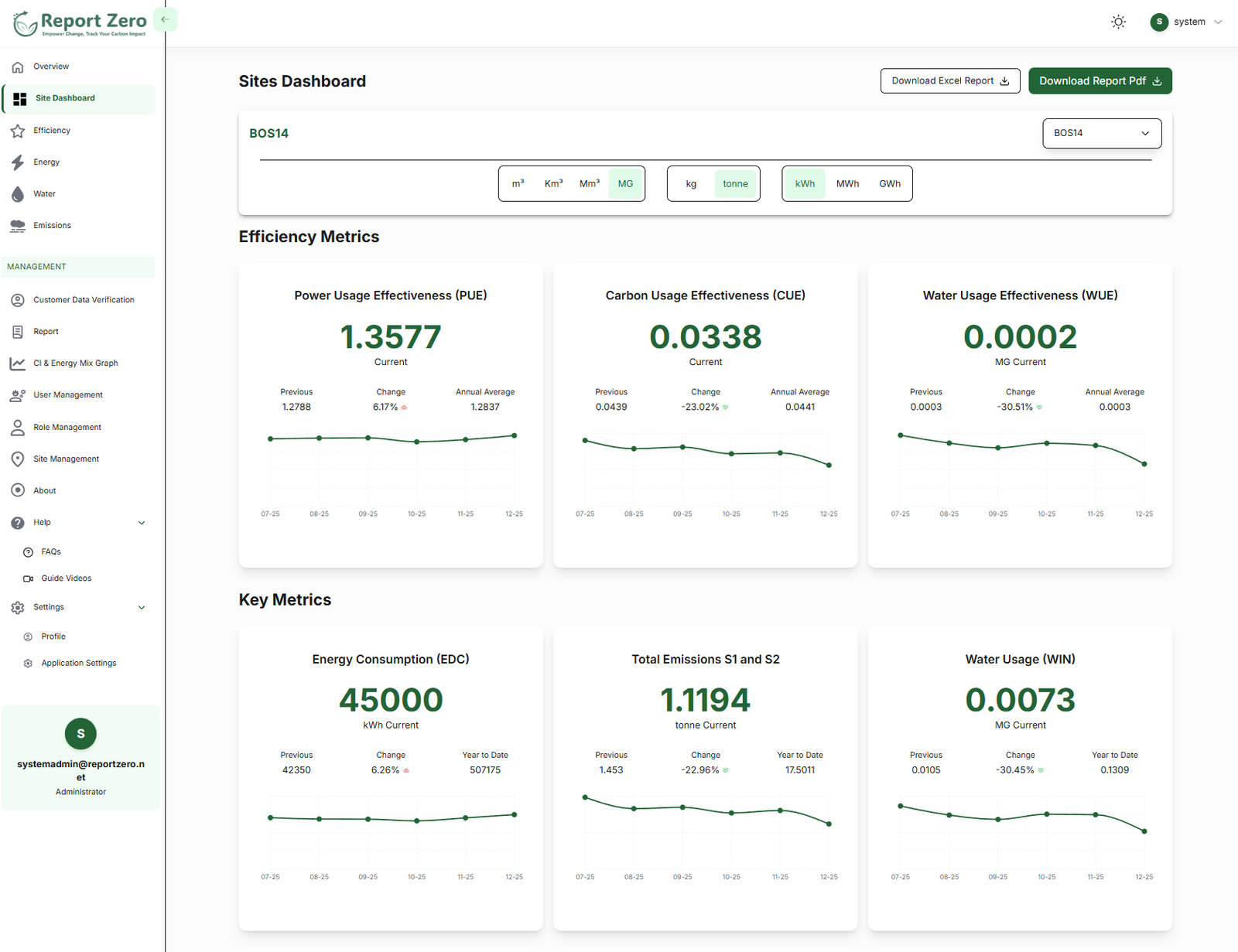
Portfolio-level-Visibility, benchmarking, and prioritisation
The most common use case for Report Zero is to establish a single, comparable view across complex data-centre portfolios, removing inconsistencies created by site-specific tooling, spreadsheets and local reporting practices.
Facilities and operations teams benchmark energy, water, carbon and efficiency performance across sites, identify underperforming locations and quantify the impact of improvement initiatives. Portfolio-level insight supports investment prioritisation, capex deferral and evidence-based discussions with senior leadership.
In practice, this allows portfolios to be actively managed rather than retrospectively reported, bringing true transparency and visibility.
Compliance & Reporting
Audit-ready metrics aligned to recognised standards
A common use case for Report Zero is automating regulatory and sustainability reporting using consistent, standards-aligned calculations and automated reporting.
Facility-level operational data is aggregated and calculated in line with ISO 30134, EN 50600, EED, CSRD and related frameworks, producing exportable outputs suitable for internal assurance and external audit. Sustainability and compliance teams reduce reliance on estimates, eliminate manual data preparation and ensure submissions align with recognised methodologies.
Reporting becomes repeatable, defensible and significantly less resource-intensive.

Operational Efficiency
Identify inefficiencies and improve day-to-day performance
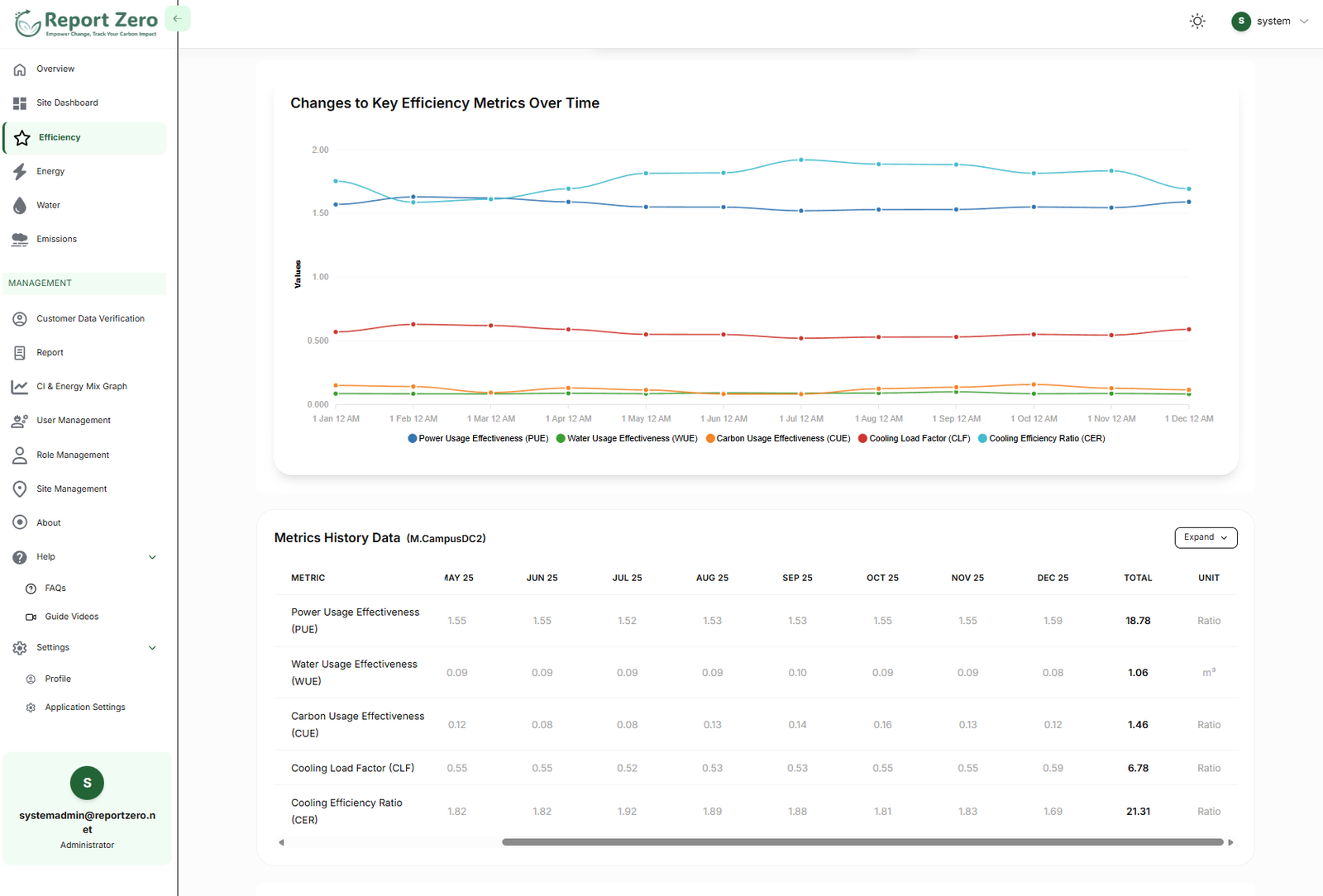
Report Zero is frequently used by operations teams to support continuous optimisation of power, cooling and water performance.
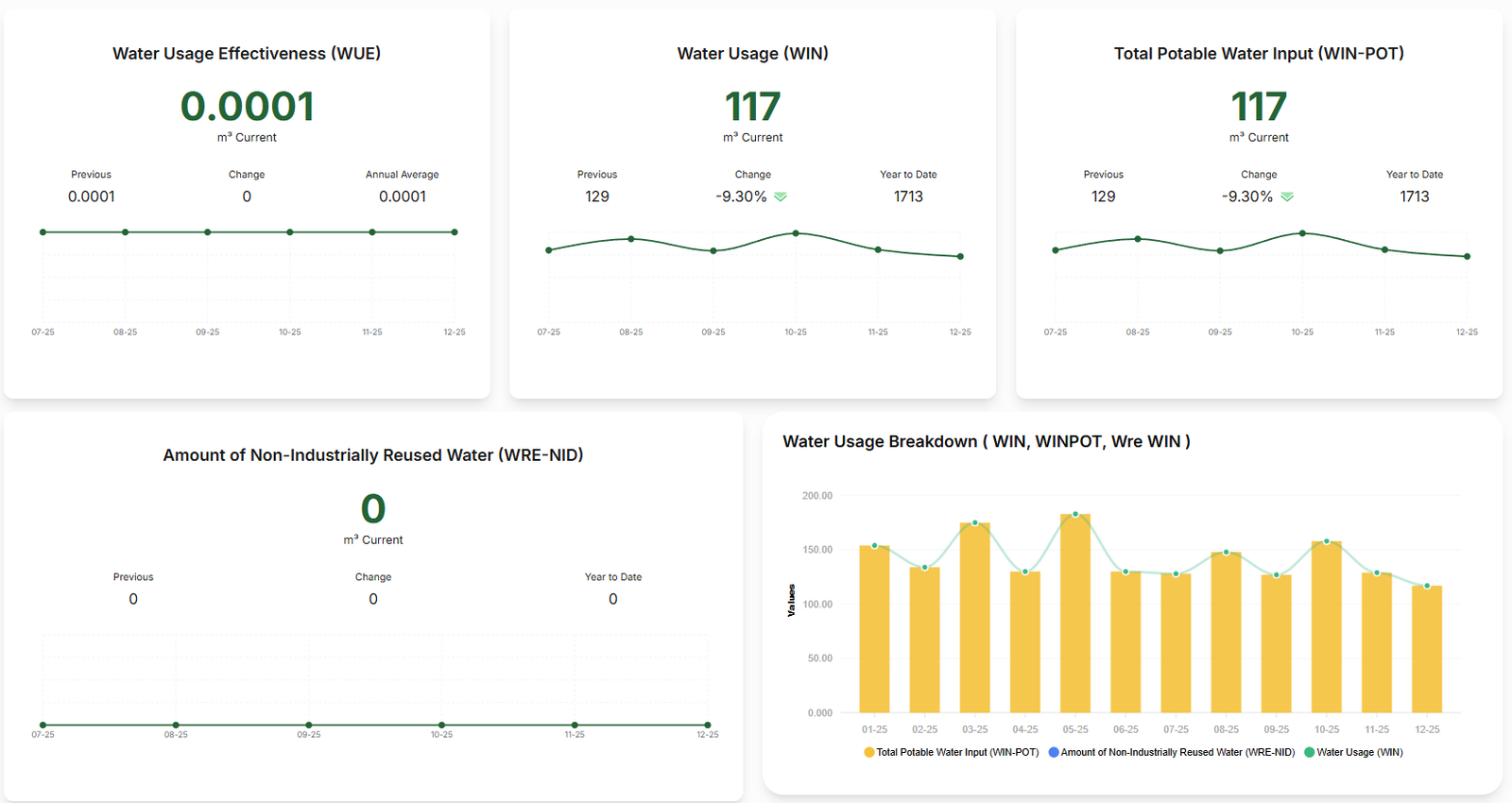
Measured consumption data and efficiency metrics are analysed over time to detect anomalies, reduce idle load , tune cooling performance and improve utilisation across data halls and sites. Trend analysis supports root-cause investigation and enables corrective actions to be prioritised based on measurable impact.
Operational improvements can be tracked, compared and sustained rather than treated as one-off initiatives.
Energy & Resource Optimisation
Align consumption, renewables and cost across the estate
Many organisations use Report Zero to better understand how energy, water and fuel are consumed across their estates, and how those patterns relate to cost, resilience and environmental impact.
The platform supports detailed analysis of electricity use, cooling demand, water consumption, generator fuel use and renewable contribution. Metrics such as renewable energy share and Energy Reuse Factor (ERF) help procurement and sustainability teams evaluate sourcing strategies, renewable contracts and on-site generation options. Energy and resource decisions can be assessed holistically, rather than in isolation.
Capacity Planning & Forecasting
Plan growth, refresh cycles, and infrastructure utilisation.
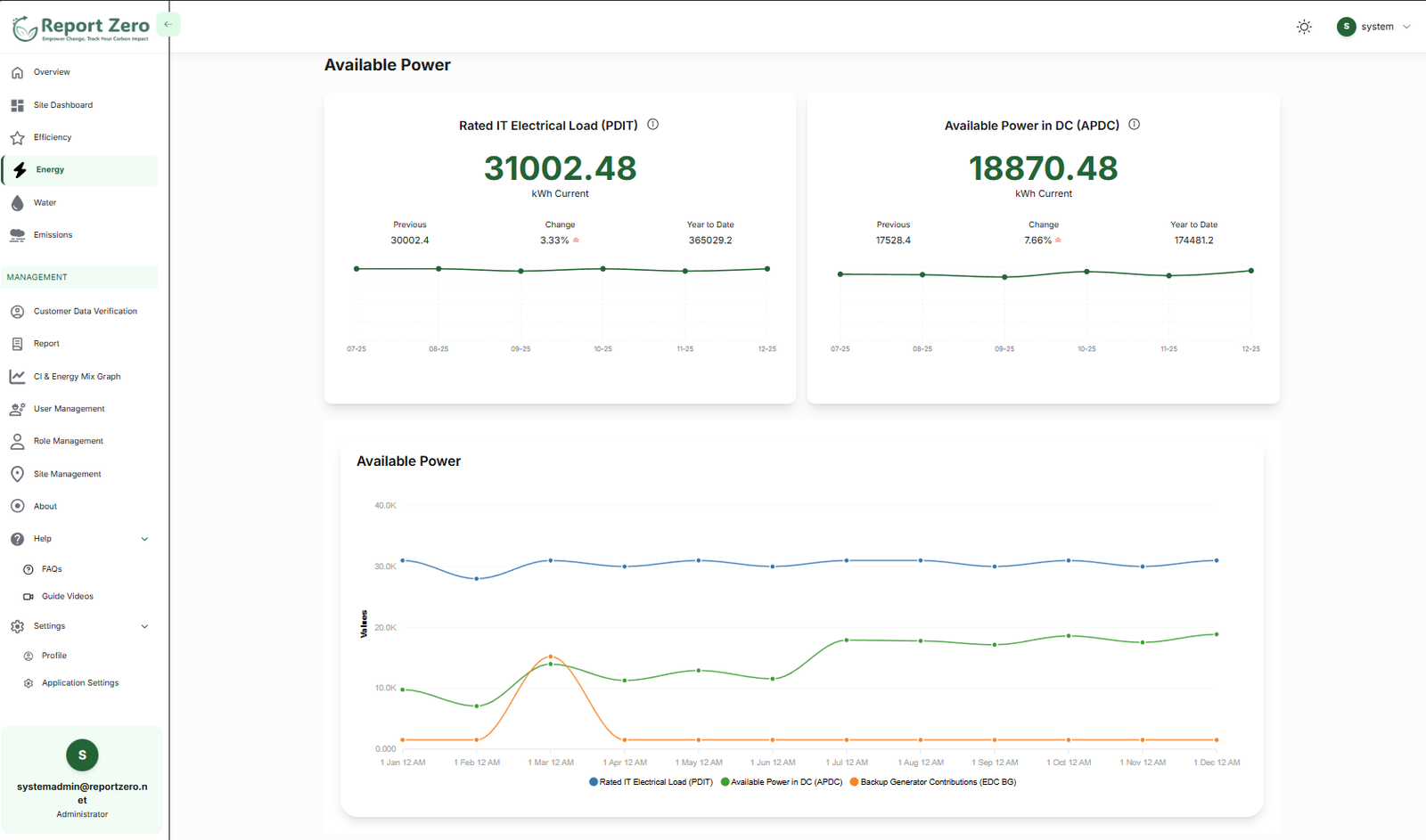
Report Zero is also applied to longer-term planning and forecasting use cases, where operational and environmental data inform infrastructure decisions.
By combining utilisation, efficiency and consumption metrics, teams can model future demand, assess the impact of growth or consolidation scenarios, and understand how refresh cycles affect energy, water and carbon performance. This supports more confident decisions around expansion, deferral or migration and reduces the risk of over-provisioning. Capacity planning becomes evidence-led rather than assumption-driven.
Leadership & ESG Decision Support
Connect sustainability, cost and operational performance
Dashboards and reports translate operational metrics into strategic insight, helping boards, ESG leaders and finance teams understand how efficiency initiatives, sourcing decisions and infrastructure changes affect cost, risk and environmental exposure. Performance trends can be reviewed with confidence that underlying calculations are consistent and defensible.
This supports stronger governance and more informed executive decision-making.
Cross-Functional Collaboration
One shared dataset, used across teams
A recurring use case for Report Zero is enabling collaboration across facilities, IT, sustainability and finance by establishing a single, consistent metrics foundation.
Role-specific views support day-to-day operations,compliance reporting and executive oversight, while shared calculations ensure alignment on targets and performance. Data can be exported via API to internal systems, supporting integration with existing reporting, analytics and governance toolsets.
Teams work from the same numbers, rather than reconciling competing versions of the truth.
Modernisation & Site Strategy
Use performance data to guide transformation decisions
Data-centre modernisation and site strategy decisions are often supported by Report Zero where capital investment and long-term commitments are involved.
Consistent performance, efficiency and environmental metrics help organisations prioritise which sites to retrofit, migrate, consolidate or exit. Potential cost savings,efficiency gains and environmental impacts can be quantified before committing to new builds, repatriation or transformation programmes.
This reduces risk and improves confidence in high-impact, long-term decisions.

Every use case, one unified platform
Whether your priority is compliance, cost reduction, or modernisation, the foundation is the same: accurate, consistent, auditable data. Report Zero brings together the information you already have, standardises it, and makes it decision ready.